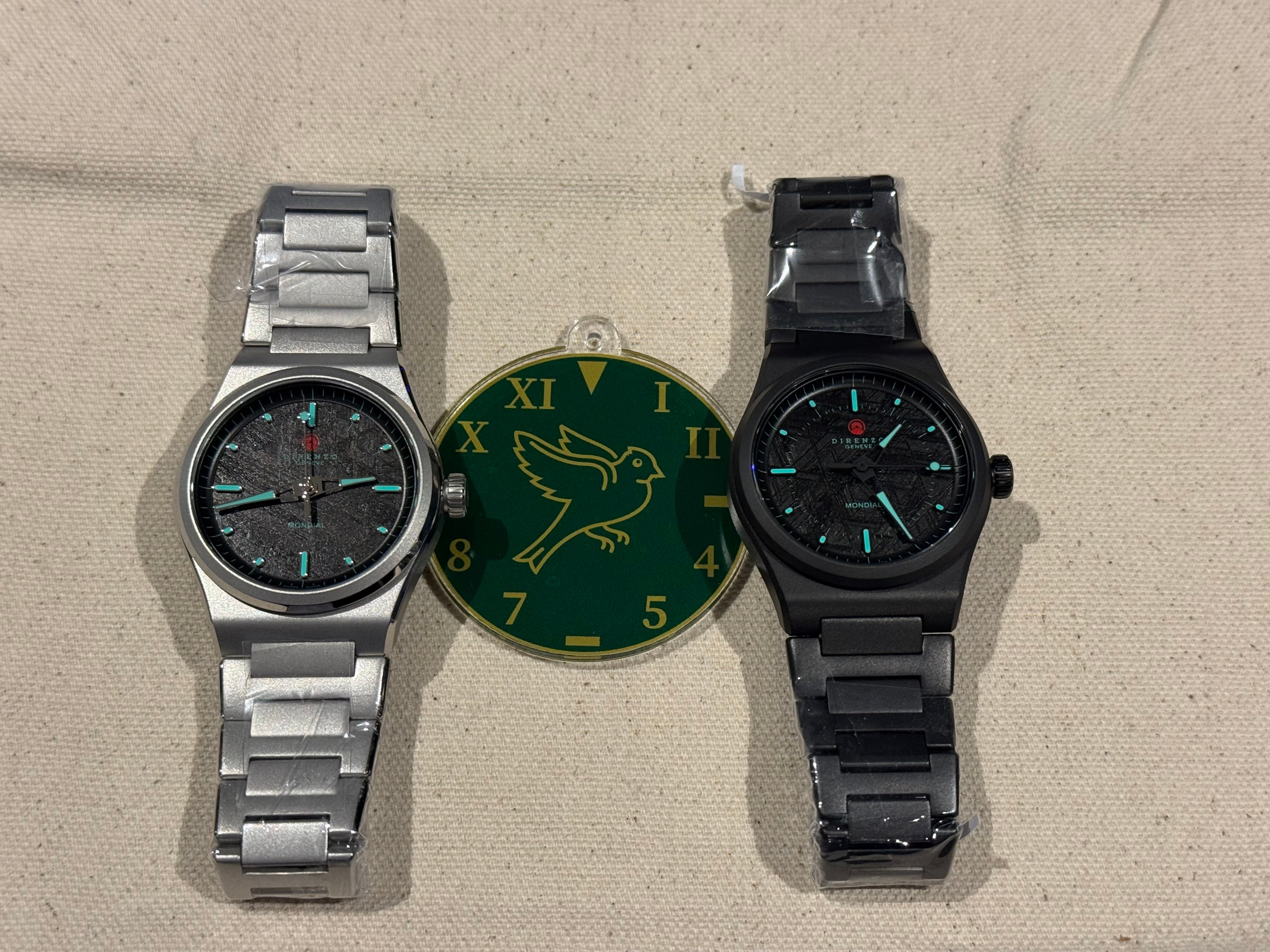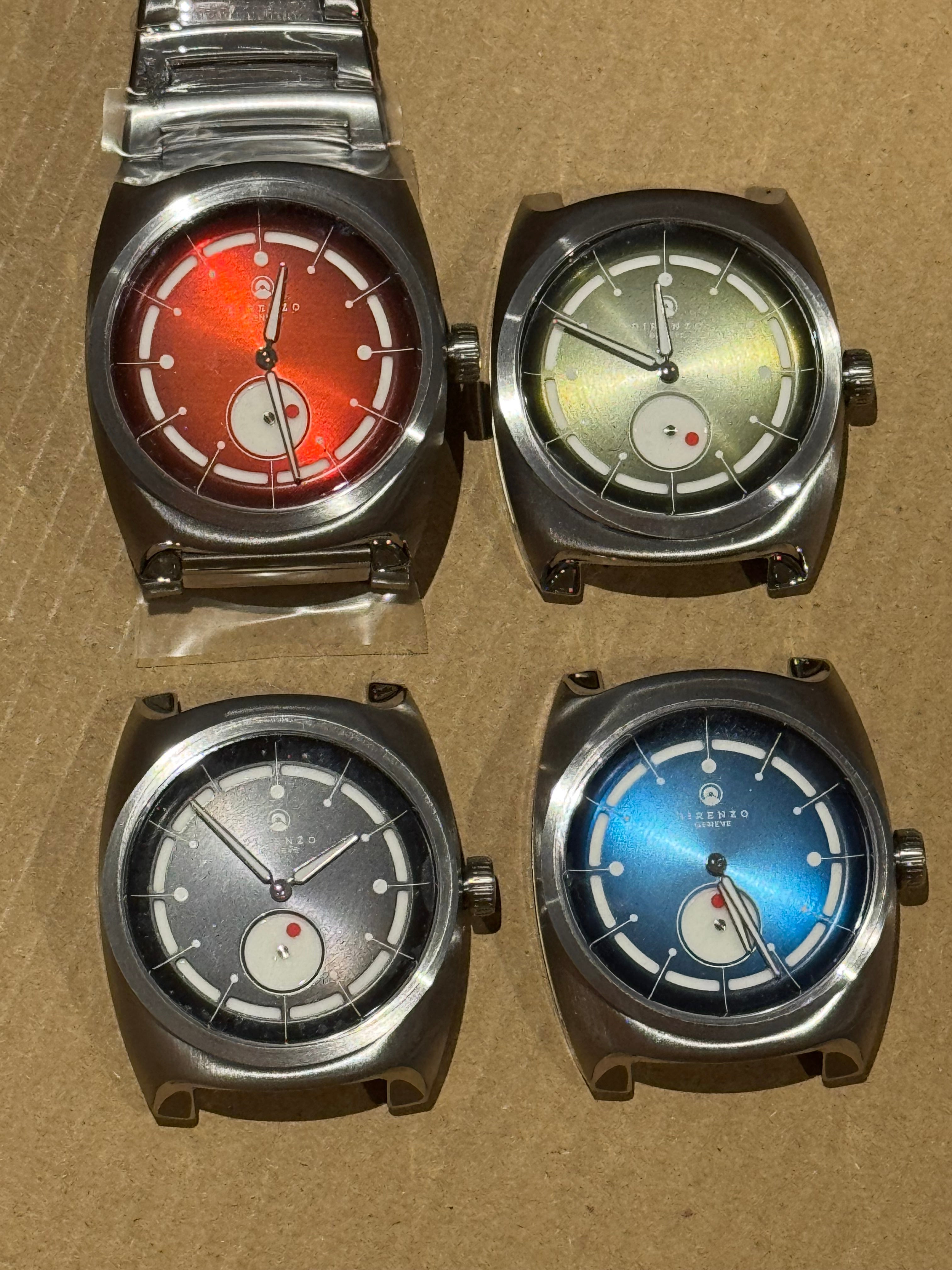



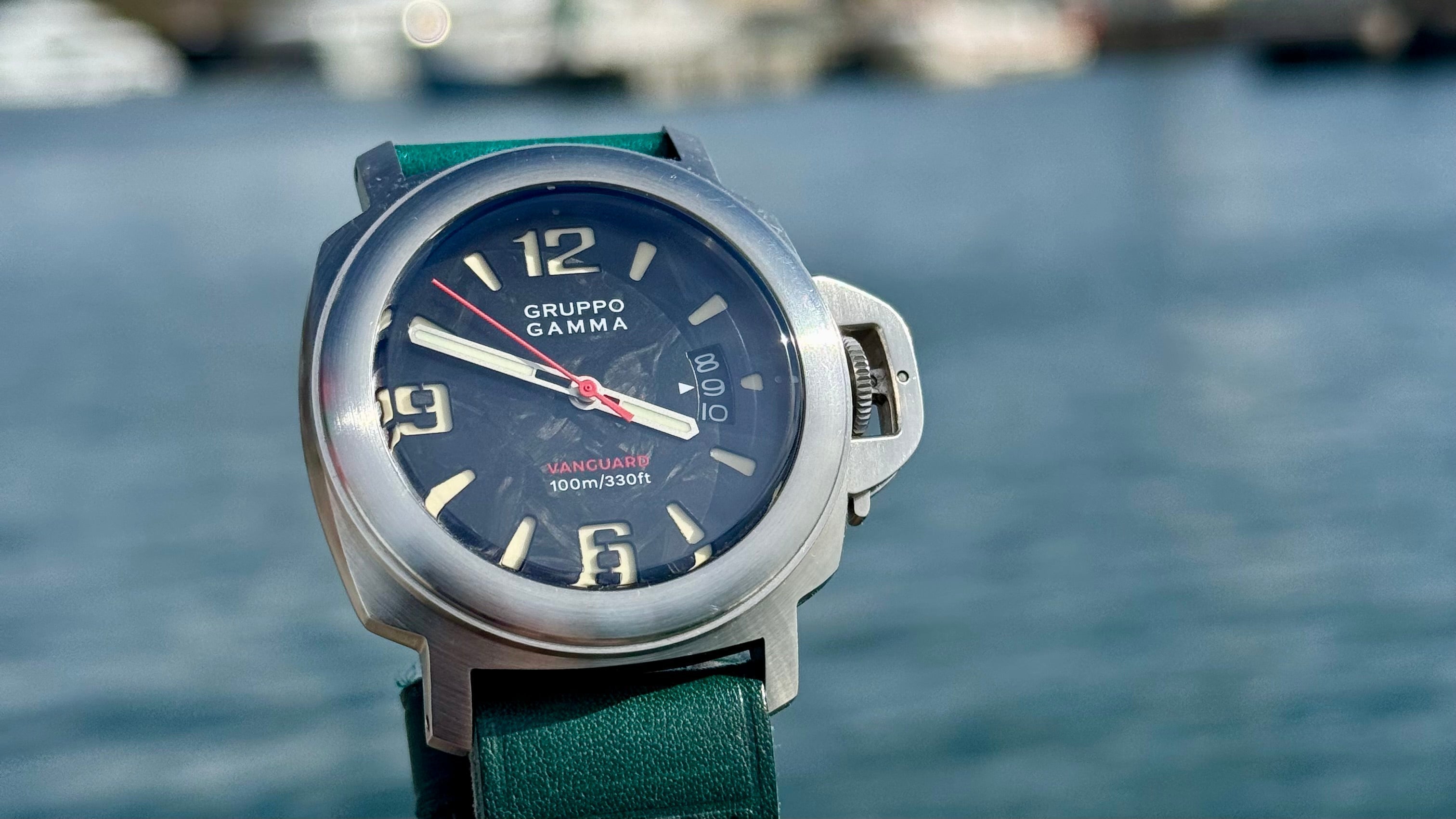
Forged Carbon Dials: Why the Gruppo Gamma Vanguard AG-10, AG-11, AV-10 and AV-11 Feel Different
In watch collecting, the dial is often where emotion begins. Case size, movement, crystal and water resistance all matter, of course, but the dial is what you see every time you look down at your wrist. It is the part of the watch that catches the light, creates personality and makes one model feel different from another.
That is exactly why the Gruppo Gamma Vanguard AG-10, AG-11, AV-10 and AV-11 stand out. These watches do not use a conventional painted dial, a simple sunburst finish or a standard matte surface. Instead, they feature a lume-infused forged carbon sandwich dial — a material and construction choice that gives every piece a more rugged, technical and collectible character.

Forged carbon is a material most people associate with expensive cars, motorsport engineering and high-performance components. It has been used in the world of supercars because it is light, strong and visually unmistakable. Unlike traditional woven carbon fibre, which has a regular weave pattern, forged carbon has a chaotic, marbled, almost storm-like texture. It looks industrial, raw and modern.
On the Vanguard, Gruppo Gamma takes that idea and makes it even more distinctive. The forged carbon dial is not just decorative. It is part of a sandwich dial construction, with cut-out markers and a lower layer filled with Swiss Super-LumiNova. Even more interestingly, the forged carbon itself is infused with thin streaks of luminescent material, creating a dial surface that glows in the dark and gives every watch its own pattern. Gruppo Gamma describes the result clearly: no two dials are alike.
For collectors, that matters. A watch can have the same reference number, the same movement and the same case dimensions, but when the dial material forms naturally varied patterns, each example becomes slightly personal.
What is forged carbon?
Forged carbon, often called forged carbon fibre or forged composite, is a carbon-based composite material made by compressing chopped carbon fibres with resin inside a mould. Traditional carbon fibre is usually recognised by its woven pattern: long fibres arranged in a regular grid, layered and cured to create a lightweight, rigid structure. Forged carbon is different. Instead of a visible weave, it uses shorter, randomly oriented fibres, producing a more organic and irregular appearance.
That irregularity is the appeal. Forged carbon does not look perfectly uniform. It looks like black marble, smoke, stone or frozen motion. Depending on the cut, compression and finishing, the surface can show bright flashes, darker patches and swirling textures. This is why forged carbon feels so appropriate for a tool watch: it looks technical without looking sterile.
The material became widely known through high-performance collaborations and automotive applications. Lamborghini and Callaway worked on a material called Forged Composite, with the goal of reducing weight and enabling strong, moulded carbon structures for performance use. Lamborghini explored it for lightweight vehicle structures, while Callaway applied the material to golf club heads. The shared engineering logic was simple: reduce weight, maintain strength and allow complex shapes to be produced efficiently.

That automotive connection is important because it explains why forged carbon feels so modern. It is not a traditional luxury material like enamel, mother-of-pearl or precious metal. It comes from a world of performance: supercars, racing-inspired engineering, advanced composites and technical design.
Why forged carbon works so well in watches
Forged carbon is still relatively uncommon in watches, especially when compared with familiar dial finishes such as sunburst, fumé, matte lacquer, guilloché or meteorite. You may see carbon used for cases in some sports watches, but forged carbon dials remain much rarer. This is partly because the material is difficult to control aesthetically. Every dial has its own pattern, and the result cannot be made perfectly identical from one unit to the next.
For many mass-market watches, that variation is a problem. For collectors, it can be the exact opposite.
A forged carbon dial gives a watch a feeling of individuality. The pattern is not printed. It is not a graphic. It is not artificial texture stamped onto a flat surface. The depth and irregularity come from the material itself. That gives the dial a more physical presence, especially under changing light.
On the Gruppo Gamma Vanguard, this material choice fits the watch perfectly. The Vanguard is not trying to be delicate or classical. It has a strong 42 mm case, bold hands, oversized indices, a box-shaped sapphire crystal, a fixed domed bezel and a crown protection system with a locking device. The forged carbon dial matches that personality: rugged, mechanical, industrial and unapologetically different.
The special part: lume-infused forged carbon
The most interesting detail is not simply that the Vanguard uses forged carbon. It is that the dial is lume-infused.
Gruppo Gamma explains that it pioneered the use of lume-infused forged carbon dials in sandwich dial construction. Rather than using two conventional metal plates, the upper layer is made of forged carbon, with the indices precisely cut out. Below that, recessed markers are filled generously with high-grade Super-LumiNova. The two layers are then secured by small bolts. On top of that, the forged carbon plates themselves are infused with thin streaks of luminescent material, creating a marbled finish that glows in the dark.
This gives the Vanguard dial two different kinds of drama.

By day, you see the forged carbon: black, grey, smoky, marbled, technical. By night, the watch changes character. The large markers and hands glow strongly, but the carbon itself also comes alive through subtle luminescent streaks. That makes the dial feel less like a flat surface and more like a material with hidden energy inside it.
This is exactly the kind of detail that makes microbrand watches exciting. Large mainstream brands often play safe because every design must appeal to the widest possible audience. Gruppo Gamma can do something more adventurous: take a technical material, combine it with sandwich construction, add lume into the carbon and create a dial that feels closer to a custom object than a generic production part.
No two dials are alike
One of the strongest collector arguments for forged carbon is uniqueness. Because the material forms irregular patterns, every dial has its own texture and distribution of carbon streaks. Some examples may look darker and more subtle. Others may show stronger marbling. Some may reveal more dramatic lume streaks when the lights go down.
That means the AG-10, AG-11, AV-10 and AV-11 are not simply four references with the same printed dial. Each watch has a slightly different visual signature.
This is important in a world where many watches are becoming very similar. A lot of modern tool watches share the same formula: black dial, steel case, sapphire crystal, automatic movement, strong lume. Those are good specifications, but they do not always create emotional distinction. The Vanguard’s forged carbon dial adds something harder to replicate: material individuality.
For a collector, it means the watch you receive is not exactly like the one in the product photo. It has the same design, the same construction and the same identity, but the dial pattern is its own. That is part of the charm.
AG-10 and AG-11: forged carbon in brushed steel
The Vanguard AG-10 and AG-11 place the forged carbon dial inside a brushed 316L stainless steel case. This combination is probably the most versatile expression of the design. The steel case gives the watch a clean, purposeful base, while the dial adds the drama.
The AG-10 is the no-date version, powered by the Miyota 9039 automatic movement. It keeps the dial balanced and focused on the three-hand layout: hours, minutes and seconds. The absence of a date window makes the forged carbon surface feel even more uninterrupted, which many purist collectors will appreciate. The AG-10 measures 42 mm in diameter, 12.6 mm thick, with a 49.5 mm lug-to-lug and 100 m water resistance. It also features a sapphire box crystal with anti-reflective treatment, a fixed domed bezel and the Vanguard crown locking device.
The AG-11 adds date functionality while keeping the same essential personality. For buyers who prefer everyday practicality, the date is useful without changing the watch’s core identity. The forged carbon sandwich dial remains the main event, supported by bold indices, angular hands and strong Super-LumiNova performance.
Together, the AG-10 and AG-11 are ideal for someone who wants the forged carbon effect but prefers a more traditional steel finish. They are rugged, but not overly distressed. They can work with casual clothing, outdoor wear, leather jackets, denim or even a relaxed office style.
AV-10 and AV-11: forged carbon with weathered steel

The Vanguard AV-10 and AV-11 take the concept further. These models use a weathered steel case finish, giving the watch an even stronger industrial personality. Where the AG models feel clean and technical, the AV models feel more raw, aged and almost post-apocalyptic.
The AV-10 is the no-date version in weathered steel. It combines the distressed case surface with the lume-infused forged carbon sandwich dial, creating a watch that looks intentionally rugged from every angle. Gruppo Gamma describes the AV-10 as having a weathered steel case that captures raw, industrial character, with the forged carbon dial amplifying that distressed personality.
The AV-11 adds a date window and keeps the same weathered case treatment. Gruppo Gamma notes that the AV-11 uses a bold 42 mm weathered steel case, a box-shaped sapphire crystal and a lume-infused forged carbon sandwich dial. It also highlights the oversized indices, angular hands and specially designed date window for readability.
The AV models are especially interesting because the case and dial speak the same visual language. The weathered steel looks aged and worn-in; the forged carbon looks irregular and elemental. Together, they create a watch that does not feel polished in the traditional luxury sense. It feels like equipment. It feels like something built for use.
Why few watches use forged carbon dials
Forged carbon is still not common in watch dials for several reasons.
First, it is not a conventional watchmaking material. Traditional watch dials are usually metal-based, because metal is stable, predictable and easy to finish consistently. Forged carbon requires a different production approach and a different aesthetic tolerance. The maker has to accept that variation is part of the design.
Second, it is a bold look. A forged carbon dial does not disappear quietly. It has visual movement and texture. That makes it excellent for collectors who want something different, but less suitable for brands trying to create conservative dress watches.
Third, it works best when the whole watch supports the material. A forged carbon dial inside a very classical case could feel forced. On the Vanguard, it makes sense because the case, hands, crown guard, lume and tool-watch proportions all support the same rugged concept.
That is why the Vanguard feels coherent. The forged carbon is not a random novelty added for marketing. It is part of the watch’s identity.
Forged carbon vs meteorite, guilloché and enamel
Collectors often compare unusual dials, so it helps to understand where forged carbon sits.
A meteorite dial is natural and cosmic. Its appeal comes from extraterrestrial origin and Widmanstätten patterns formed over millions of years. A guilloché dial is traditional and decorative, often connected with craftsmanship and fine finishing. An enamel dial is classical, glossy and difficult to produce well.
A forged carbon dial is different. It is modern, technical and performance-oriented. It does not say “old-world luxury”. It says “motorsport, engineering and material science”. That makes it especially appealing for collectors who like supercars, carbon fibre, mechanical objects and contemporary tool watches.
The Vanguard dial also adds something most forged carbon applications do not: lume integration. It is not just a carbon surface. It is a carbon surface that participates in the night-time identity of the watch.
Why the Vanguard forged carbon dial works for European collectors
For European collectors, the Vanguard has a strong appeal because it combines several trends in one watch without feeling generic.
It has the independence of a microbrand. It has the practical specifications of a modern daily wearer. It has the strong visual identity of forged carbon. It has the tactile charm of a sandwich dial. It has high-performance lume. And in the AG and AV versions, it gives buyers a clear choice between cleaner brushed steel and more extreme weathered steel.
The result is a watch that feels collectible but still wearable. It is not a safe black-dial sports watch. It is a conversation piece. Someone who notices the dial will immediately ask what it is. That is when the story becomes interesting: forged carbon, inspired by performance engineering, infused with lume, and unique from one dial to the next.
Which Vanguard forged carbon model should you choose?
Choose the AG-10 if you want the purest layout: brushed steel, no date, clean symmetry and maximum focus on the forged carbon dial.
Choose the AG-11 if you like the same brushed steel case but want the practicality of a date display.
Choose the AV-10 if you want the most rugged no-date version, with a weathered steel case that makes the forged carbon dial feel even more industrial.
Choose the AV-11 if you want the full package: weathered steel, forged carbon, date functionality and the strongest “adventure tool” personality in the group.
There is no wrong answer. The main choice is between brushed steel vs weathered steel and no-date vs date. The forged carbon dial remains the centrepiece across all four.
Final thoughts
Forged carbon dials are rare because they are not easy to standardise, not traditionally decorative and not suitable for every watch. But when used correctly, they can transform a watch completely.
The Gruppo Gamma Vanguard AG-10, AG-11, AV-10 and AV-11 use forged carbon in a way that feels authentic. The material fits the case. The sandwich construction gives the dial depth. The Super-LumiNova gives the watch serious night-time performance. And the lume-infused carbon streaks make each dial unique.
For collectors who want a watch with character, this is the real appeal: you are not only buying a reference number. You are buying a dial pattern that belongs to your watch alone.

Explore the Gruppo Gamma Vanguard collection at Finch Watches and discover how forged carbon changes the personality of a tool watch.